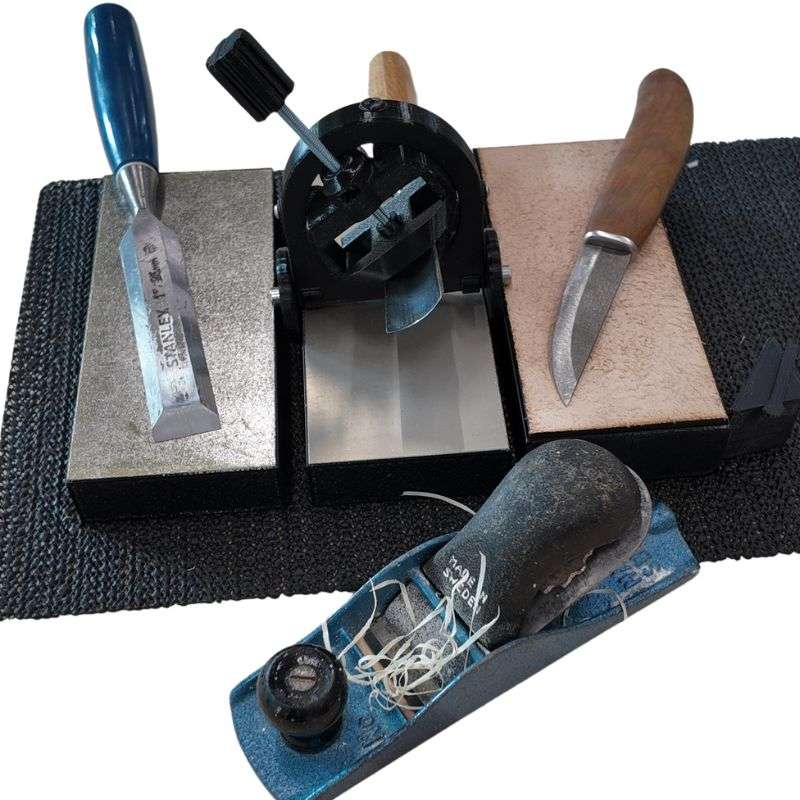
For some time now, I’ve been trying to find new customers through their kitchens. It’s clear that there is business to be done there – many people own chef’s knives worth hundreds of euros, yet hesitate to spend a fraction of that on a diamond sharpener to keep them sharp and enjoyable to use.
There is, however, a knowledge gap. Most people have no idea how to sharpen their knives, and many are even afraid to try because they think they might damage or ruin their expensive tools.

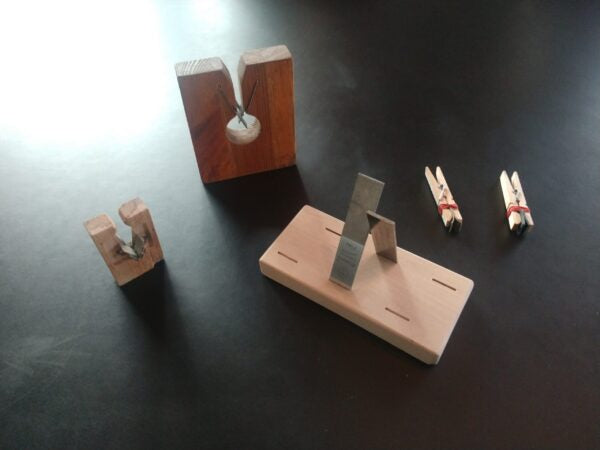
So I started exploring how we could create a solution to this problem, and above you can see some of the early prototypes.
Yes, they may not look like something you’d trust with your $200 knife, but we’ve actually learned a lot about usability, sharpening efficiency, and the processes required to manufacture something like this (along with many even uglier attempts).
An idea has now begun to take shape – one that we believe will become a very popular kitchen knife sharpener for both small and large knives.
Key insights from development
- The diamond surfaces must intersect. Without that intersection, it’s impossible to properly reach the actual edge. In the prototypes above, the vertical stones create an X that ensures correct contact with the edge.
- At least three intersections are needed for lateral stability. With only two, the knife tends to twist clockwise or counterclockwise depending on the sharpening direction, resulting in uneven angles and a poorer edge.
- Fast results with few strokes are crucial. The fewer strokes required, the easier it is to maintain a consistent position, which leads to a sharper and more consistent edge.

So what will the new sharpener look like?
I’ll show you within 14 days, when we present the actual product – not just a prototype.
I’ll keep you posted.
Ola